Artículo de investigación
Vol. 1 | 2026 (English)
55 min
Criminal and administrative liability of political organizations under Law No. 32054: Structural limits and a proposed tiered model of attribution
La responsabilidad penal y administrativa de las organizaciones políticas bajo la Ley N.º 32054: límites estructurales y propuesta de un modelo escalonado de imputación
Juan Pavel Valdez-Rondinel* | Universidad Nacional de San Cristóbal de Huamanga (UNSCH), Ayacucho, Perú
*Correspondencia:
*Juan Pavel Valdez-Rondinel. juan.valdez.13@unsch.edu.pe
Recepción:
30/10/2025
Aceptación:
19/01/2026
Publicación:
10/02/2026
Métricas
317
Visualizaciones
27
Descargas
Compartir
Compartir
Resumen (ES)
Este artículo analiza el régimen de responsabilidad penal y administrativa establecido por la Ley N.º 32054 para las organizaciones políticas en el Perú. A partir de una metodología analítica y comparada, complementada con herramientas del análisis económico del derecho y la economía conductual, se sostiene que la norma incorpora componentes propios del compliance corporativo, pero no desarrolla un modelo operativo de imputación intraorganizacional, lo que limita su capacidad preventiva. El estudio muestra que la atenuación sancionatoria prevista reduce la severidad del sistema sin incrementar la probabilidad ni la celeridad de la persecución, debilitando la prevención general y especial y generando incentivos de cumplimiento subóptimos al interior de las organizaciones políticas. Sobre esa base, se propone un modelo escalonado de responsabilidad que distingue entre (i) decisiones estratégicas de la dirigencia, (ii) fallas operativas de los órganos internos y (iii) conductas individuales de la militancia, articulando criterios diferenciados de imputación y respuesta sancionatoria que permitan compatibilizar la prevención con la protección del pluralismo democrático.
Palabras clave (ES):
Responsabilidad escalonada
Compliance político
Organizaciones políticas
Ley N.º 32054
Diseño institucional
Prevención de delitos
Resumen (EN)
This article examines the criminal and administrative liability framework established by Law No. 32054 for political organizations in Peru. Drawing on an analytical and comparative methodology, supplemented by tools from the economic analysis of law and behavioral economics, it argues that the statute incorporates elements characteristic of corporate compliance, yet fails to develop an operational model of intra-organizational attribution of liability, thereby constraining its preventive capacity. The study shows that the envisaged sanction mitigation reduces the system’s severity without increasing either the likelihood or the swiftness of enforcement, weakening both general and specific deterrence and generating suboptimal compliance incentives within political organizations. On that basis, the article proposes a tiered model of responsibility that distinguishes between (i) strategic decisions by the leadership, (ii) operational failures of internal bodies, and (iii) individual conduct by party members, articulating differentiated criteria for attribution and sanctioning responses capable of reconciling prevention with the protection of democratic pluralism.
Palabras clave (EN):
Tiered responsibility
Political compliance
Political organizations
Law No. 32054
Institutional design
Crime prevention
1. Introduction
The promulgation of Law No. 32054 has configured an incomplete liability regime for political organizations in Peru: while it incorporates elements typical of corporate compliance, it omits its essential structure, that is, an operative model of imputation that distinguishes between leadership bodies, functional organs, and party bases. This absence generates a structural deficit in the prevention of political criminality and strains the relationship between punitive efficacy and democratic pluralism, being a solely declaratory regime. The challenge consists, therefore, first in determining to what extent an attenuated regulation can protect the ius participationis without incentivizing opportunistic behaviors within political organizations and, secondly, in proposing a solution to this inconsistency.
The problem is inserted into a long-standing discussion regarding the criminal capacity of collective entities. Although classical doctrine (especially Schünemann) rejected the possibility of imputing criminal liability to them, considering that they lacked individual guilt and moral attributes (González, 2012, pp. 144-145), the contemporary expansion of economic criminality and the complexification of organizational structures justify the transition toward the societas delinquere potest paradigm. In the comparative sphere, this turn allowed for overcoming the figure of the “straw man” (González, 2012, p. 63) and attributing autonomous liability to the organization when the crime emerges from structural failures, internal incentives, or supervision deficits (Escrihuela, 2019, pp. 163, 380, 432).
In the Peruvian case, this debate acquires particular relevance because political parties fulfill a constitutional function guaranteed by Article 35 of the Constitution, which requires making penal prevention compatible with the preservation of democratic pluralism (Constitución Política del Perú, 1993, art. 35). Law No. 32054 attempts to resolve this tension through a regime of attenuated sanctions and the exclusion of burdensome measures such as dissolution, the closure of premises, or the total suspension of activities. However, by not incorporating a differentiated attribution of intra-organizational liability, the norm reduces severity without reinforcing either the probability or the celerity of prosecution, which weakens the deterrent capacity of the penal system and may promote perverse incentives in Peruvian party structures characterized by personalism, informality, and internal control deficits (Navarro, 2011).
Based on this, this article maintains as its central thesis that Law No. 32054 is insufficient to face political criminality, for while it partially reproduces the logic of business compliance, it does not adopt its decisive component: a concrete imputation design based on the identification and development of functional levels of liability. In accordance with the normative rule guiding this study, when the protection of democratic pluralism enters into tension with the need for institutional integrity, a functional criterion of tiered responsibility must prevail, displacing imputation toward the decision-making levels that concentrate organizational power. Only thus is it possible to harmonize the constitutional mandate of preserving democratic competition with the criminological requirement of preventing the instrumentalization of the party as an organization.
The original contribution of this article consists of formulating a tiered model of criminal imputation for political organizations, based on authorship by organizational dominance, organizational defect, and functional liability of internal organs. This model corrects the structural void of Law No. 32054 and allows for making penal prevention and democratic pluralism compatible.
Finally, the study is articulated in five sections. The first reconstructs the transit from the classical denial of the criminal capacity of collective entities toward a structural model of liability applicable to political organizations, showing how Law No. 32054 incorporates that turn only in appearance, as it omits its functional architecture.
The second examines the relationship between Bill No. 6084/2023-CR and the finally approved regime, evidencing that the legislator opted for a hybrid model that recognizes the criminal capacity of the party but lacks differentiated criteria of intra-organizational imputation.
The third section analyzes the accessory consequences of Article 105 of the Penal Code and their constitutional compatibility when they fall upon political parties, contrasting the Peruvian design with the functional standards of Italy, Spain, and Chile.
The fourth evaluates the deterrent efficacy of Law No. 32054 based on Law and Economics and behavioral economics, demonstrating that the reduction of severity, combined with low probability and null celerity of prosecution, generates defective organizational incentives.
The fifth section develops the central proposal of the article: a tiered model of liability based on authorship by organizational dominance, organizational defect, and functional liability. This design allows for reconstructing the internal anatomy of the party and offers a normative alternative capable of making penal prevention and the protection of democratic pluralism compatible.
2. Metodology
This study adopts an analytical-comparative approach, under which norms are examined based on their structure, function, and internal consistency. Within this framework, the article reconstructs the scope of Article 105 of the Peruvian Penal Code, Laws 32054 and 30424, and Bill No. 6084/2023-CR, identifying their implicit organizational architecture and the gaps that prevent a functional imputation within political organizations.
The analysis is articulated with a comparative method aimed at identifying structural criteria for imputation in the systems of Italy, Spain, and Chile. This comparison is not employed descriptively, but functionally: each model is evaluated in relation to its capacity to distinguish organizational levels, individualize responsibilities, and calibrate sanctions according to the entity’s internal anatomy. The purpose is not to transplant foreign institutions, but to extract useful structural principles for reconstructing the Peruvian regime.
As auxiliary tools, categories from economic analysis of law—severity, probability, and celerity as variables of the deterrent calculation—and behavioral economics—cognitive biases, irrational optimism, temporal discounting, and risk normalization—are employed, applied to the organizational dynamics of political parties. These tools allow for estimating the real effects that Law No. 32054 generates on the conduct of the leadership and internal bodies, beyond its formal design.
3. Liability of political parties in peru
3.1. From classical denial to the structural liability of collective entities
The classic rule societas delinquere non potest—according to which collective entities lack criminal capacity due to not possessing individual guilt or moral conscience—dominated much of 20th-century criminal law. As Schünemann warns, this vision associated the crime exclusively with the “harmful man,” excluding any autonomous imputation to complex organizations (González, 2012, p. 57). However, the growth of economic criminality and the consolidation of organizational structures with a real capacity for risk production justified the transition toward the societas delinquere potest paradigm. Indeed, comparative experience demonstrates that organizations can generate illicit acts stemming from internal failures, perverse incentives, structural omissions, or cultures of non-compliance (Escrihuela, 2019, pp. 86-87, 493-496). Peruvian law materialized this shift, already delineated for some time by Peruvian academia (Bernales Ballesteros, 2002). A criterion that ended up crystallizing in recent years—undoubtedly due to media pressure, pressure that in the Peruvian scenario is of utmost importance (Acevedo, 2012, p. 51)—through Law No. 30424, which attributes autonomous criminal liability when the crime arises from organizational deficits or the breach of prevention duties; but before analyzing this aspect in depth, let us explore a little what the interpretive process of the creation of Law No. 30424 was.
3.2. Precedents; comparison between Bill No. 6084/2023-CR and Law No. 32054
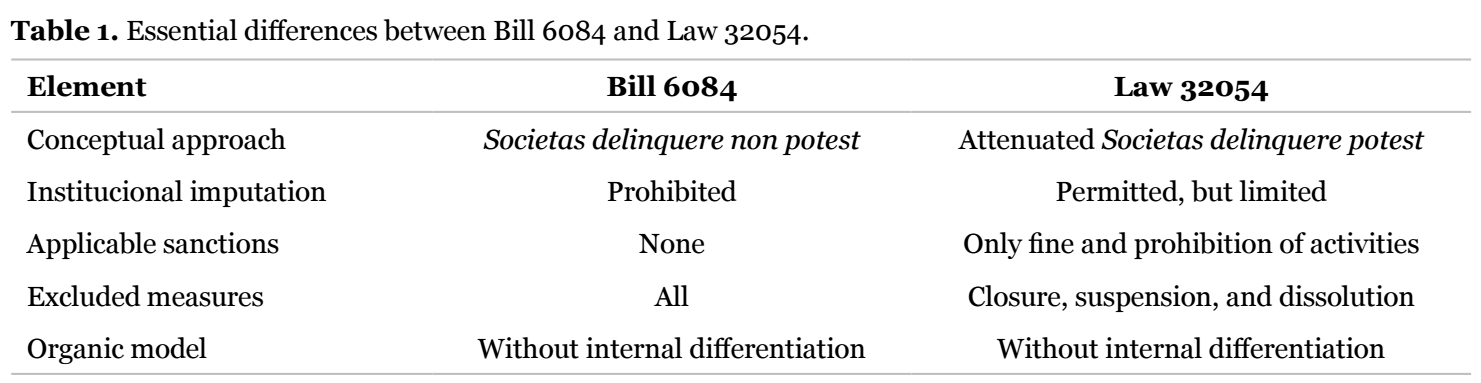
A first attempt to regulate the liability of political parties was Bill No. 6084/2023-CR, which constituted the starting point of the contemporary debate on the liability of political organizations in Peru. Its proposal was based on an explicit return to the societas delinquere non potest paradigm: it recognized parties as associations of public interest and excluded any form of institutional imputation, limiting liability exclusively to the natural persons involved. In accordance with its Articles 3 and 4, the individualization of the alleged responsible parties made applying Article 105 of the Penal Code or Article 5 of Law No. 30424 inadmissible. This logic—coinciding with the position of Alpaca, who, based on the interpretation of Silva Sánchez (cited in Alpaca, 2022, p. 86), understands that Law 30424 configures a liability of a quasi-criminal nature, insofar as it rests on criteria of benefit and favoring rather than on true institutional guilt—sought to prevent a supposed “criminalization of politics” which, according to the bill, threatened the validity of democratic pluralism and which persists to this day for parliamentarians as they consider themselves “outside the legal system” (Milla Loo, 2025; Ramos, 2024).
Congress, however, opted for an intermediate path by approving Law No. 32054. While this does not enshrine the absolute exemption of Bill 6084, it does reproduce its political objective: to avoid structurally harmful sanctions—such as dissolution or closure—affecting the continuity of political parties. The difference lies in the fact that Law 32054 recognizes the criminal capacity of parties, but subjects it to an attenuated sanctioning regime that severely restricts the application of Article 105 of the Penal Code and Article 5 of Law 30424. The result is a hybrid model, where liability does not disappear, but neither is it articulated concretely to prevent political criminality.
The following table synthesizes the essential differences:
From the perspective of the economic analysis of law, as we will elaborate on later, this hybrid design alters the basic incentive structure by reducing severity without modifying probability or swiftness, which anticipates the preventive deficit that will be developed later.
3.3. The peruvian mixed model and its problematic application to political parties
Finally, the Peruvian system adopted the following configuration of a mixed model of imputation: a) Subjective liability, linked to the existence or absence of compliance programs (Law No. 30424), and b) Objective liability, derived from the benefit obtained or the instrumental use of the organization (Art. 105 CP).
This model would imply identifying where the organizational deficit is located and who should have exercised the guarantor position. Legal doctrine distinguishes two logics within these types of systems: the bottom-up logic a), focused on the material perpetrator, even without decision-making dominion. And the top-down logic b), which imputes liability to the leadership due to their guarantor position and the functional delegation of internal control (Caro y Reyna, 2016, pp. 620-624).
Regarding the top-down model, which we are interested in developing since it is the aspect of Law No. 30424 in this hybrid model, it has consolidated in economic criminal law as a form of attribution founded on the structural guarantor position possessed by those managing an organization. This logic derives from the principle according to which the leadership has functional dominion of the organizational apparatus (Pérez Alonso, 2010), as it defines incentives, designs control structures, administers resources, and establishes internal guidelines influencing the behavior of all lower levels. The thesis is classical in the theory of corporate indirect authorship, whose construction comes from German doctrine (Schünemann, Tiedemann, Hefendehl) and has been extended in the Ibero-American sphere as a standard for imputing liability in complex organizations.
This top-down logic entered the Peruvian legal order through Law No. 30424, which incorporated—similar to what is done in compliance—as a criterion of imputation and exemption. It is worth noting that compliance is not just a prevention system; it is a theory of functional imputation, because it allows determining if the risk stems from a strategic failure (leadership) or an operational failure (internal organs). When the law requires legal persons to implement prevention models, it is assuming that managerial omission is criminally imputable: it is a normative transplant of the international standard of corporate compliance enshrined, for example, in Spain (LO 1/2015), Italy (D. Lgs. 231/2001), and Chile (Law 20.393), as we will develop later.
Along these lines, the Peruvian mixed model incorporated elements of corporate compliance in two dimensions. In the preventive dimension, the existence or absence of an adequate program allows determining if the organization breached its duty to avoid foreseeable risks. Imputation, therefore, is activated when the entity lacks internal control mechanisms, which corresponds to the theory of organizational defect. As similarly developed by Bedecarratz (2020) for the Chilean case, this defect is configured precisely when the legal person does not establish internal structures capable of neutralizing the risks inherent to its activity.
And a second structural dimension: liability is assigned following the internal flow of decisions within the organization. When the risk is generated at the managerial level, due to strategic deficiencies or failures in the design of control mechanisms, the imputation is top-down, as it corresponds to the level at which relevant decisions guiding institutional functioning are adopted, as recognized by comparative doctrine (Bedecarratz, 2020).
This logic is coherent with the organizational standard developed by (Roth, 2019, cited in Bedecarratz, 2020), for whom the prevention officer must be situated at a hierarchical and decisional level such that they can influence strategic decisions and mitigate criminal risks, underscoring that the structure of liability is determined by position in the decision-making scale:
“The officer in charge of money laundering prevention must be situated at such a level in the company’s hierarchical scale and be involved in the respective commissions and committees in such a way that they must become aware in advance of all important strategic decisions in order, in case of suspicion of the commission of a crime, to be able to influence them and mitigate criminal risks” (Roth, 2019, p. 118 cited in Bedecarratz, 2020; editorial translation).
The key question is why this approach is truly useful for analyzing political parties. The reason is simple: parties are organizations, albeit with a specific constitutional purpose. In both corporations and parties: (i) hierarchical chains exist; (ii) critical areas exist (finances, logistics, electoral committees); (iii) strategic decisions and operational decisions exist; (iv) there is management of resources and instrumental use of structures; (v) there is a possibility of organizational failure generating penal risk.
However, when transferring this criterion to political parties—which are not simple private legal persons, but organizations constitutionally mandated to channel participation with a political dynamic—particular tensions emerge. Their public function demands avoiding criminal law becoming a mechanism for the erosion of pluralism, even more so in a Latin American scenario where institutional weakness is evident (Vázquez Soriano, 2024). But, at the same time, their capacity to influence the democratic system imposes a reinforced standard of institutional exemplarity when the general interest so advises (León, 2020, p. 209).
Law No. 32054 attempted to resolve this tension through an attenuated regime, eliminating serious sanctions such as dissolution, closure, and total suspension of activities—undoubtedly considering the response to possible political use, as would subsequently be confirmed (Huacasi, 2024). Nevertheless, to this day it maintains a structural problem: it treats the party as a unitary entity and not as an organization composed of functional levels with differentiated duties, competencies, and risks. And what is more worrying, it contains within its normative expression no concrete form of identification and evaluation of criminal liability.
Consequently, regarding the analysis of the Peruvian mixed model, the imported top-down logic and the central elements of corporate compliance are undoubtedly applicable to political organizations, but Law No. 32054 does not incorporate them as such. The norm preserves the traditional structure of Article 105 of the CP but eliminates severe sanctions without replacing them with an operational model allowing for the identification of the real source of the risk. In other words, the shell of compliance was imported, but not its functional anatomy, or perhaps even more gravely—given that the Peruvian political-legislative scenario is so peculiar (FIDH, 2024)—. The absence of mechanisms obliging the individualization of decisions amplifies biases typical of political organizations—irrational optimism, discounting, normalization of risk—which the literature in behavioral economics (Budzier & Flyvbjerg, 2013, p. 8) identifies as drivers of systematic non-compliance.
3.4. The inadequacy of the current regime: absence of a concrete model of responsibility
The functional core of corporate compliance as we are developing it—the hierarchical distinction between levels of decision-making, execution, and base, as we have observed—is completely absent in the Peruvian design. That omission compromises any claim of constructing a serious liability regime for political parties. The literature on the criminal liability of legal persons insists that the corporate wrong is only understood if the organizational structure and the concentration of risk in certain management and supervision positions are analyzed, not in the undifferentiated mass of members (Bedecarratz, 2020).
In any complex organization, penal risk is not distributed homogeneously: the leadership concentrates the most intense guarantor position because it decides the strategy, controls resources, sets incentives, and designs—or blocks—internal control mechanisms. Hence, serious models of imputation reserve corporate liability for spheres where there is power of direction or an unfulfilled duty of supervision, and restrict the derivation of liability when the fact responds exclusively to the particular interest of the agent (Kodea, 2021, p. 4; Camanchaca, 2019, pp. 4, 19).
Below the leadership, the functional organs of the party—treasuries, campaign committees, logistics units, and financing teams—operate as true operational risk centers. Comparative experience regarding illegal party financing shows that deviations rarely arise from spontaneous militancy, and rather are structured in those gray spaces where contributions are raised, documentation is prepared, and daily decisions about resources are made (Sandoval, 2022; Pariona, 2023; BBC News Mundo, 2018). That is why liability models starting from the “organizational defect” demand identifying rules of behavior and specific duties of direction and supervision according to the internal role of each organ; only when the crime expresses a failure of the risk management system and not a mere individual deviation can one speak of corporate imputation (Bedecarratz, 2020). A regime that does not differentiate between who decides, who executes, and who only participates peripherally ends up reproducing an archaic and unjust model of collective liability, insensitive to the real logic of power distribution and possible instrumentalization to evade responsibilities.
Finally, the militancy and campaign operators represent the lowest level of organizational incidence. Their conduct can compromise the party only if institutional benefit or structural tolerance exists. Treating the militant as if he had the same capacity for incidence on liability as the leadership implies disregarding basic principles of criminal liability: dominion of the act, organizational indirect authorship, and reinforced enforceability of control duties. Moreover, this confusion incentivizes opportunism: if the organization knows that sanctions do not differentiate levels, it will concentrate risks in its bases or delegate downwards conducts that it itself tolerates or tacitly promotes to evade the same (Ramos Martínez, 2024).
Law No. 32054 distinguishes none of these layers since, first, it generates a blurred imputation model that does not assign clear responsibilities in a just or proportional manner. Second, it radically weakens prevention: if the level where control failures originate is not identified, it is impossible to correct them. And third, it fosters the instrumentalization of the political party as a cover: a leadership that knows that the sanction is not designed to identify its real role has incentives to continue operating in opaque zones, relegating the penal cost to lower levels or simply trusting in the structural attenuation of sanctions—which in the view of a sector of society is precisely the central aim of this law (Meléndez, 2024)—will free it from any type of concrete liability.
In sum, the absence of a detailed model turns the current regime into a symbolic, declaratory device of mere political reaction, which does not prevent, does not dissuade, does not hold liable adequately, and obeys no concrete rule. The logic of corporate compliance shows that, without an internal taxonomy of responsibilities, regulatory law cannot function in complex organizations. Law No. 32054, by ignoring this architecture, renounces understanding how risks emerge within a party and, worse still, facilitates their becoming structural. In terms of deterrence theory, a regime without functional levels converts penal risk into an institutional “average cost,” which destroys the traceability of the decision and generates incentives to externalize liability toward lower layers.
4. Towards a comparative design of accessory consequences: how italy, spain, and chile inform a functional sanctioning model for political parties
4.1. A common principle in advanced models: the sanction must follow the internal anatomy of the organization
The most advanced organizational liability systems serving as paradigms for the Peruvian model—Italy, Spain, and Chile—share a structural principle that Peruvian law has not incorporated: sanctions against an organization are not directed at the entity as a uniform block, but are calibrated according to the functional origin of the risk, the affected internal structure, and the degree of institutional benefit derived from the illicit conduct.
Under these models, the legitimacy and efficacy of accessory consequences depend not only on the illicitness of the fact, but on its specific connection with the internal anatomy of the organization; that is, with the layout of its design. This approach allows for differentiating—with precision—between strategic decisions of the leadership, operational failures of functional organs, and isolated conduct without institutional impact. Law No. 32054, by ignoring this comparative standard, renounces constructing an effective and constitutionally balanced preventive system.
4.2. Italy and the paradigm of the “organizational defect”
In Italy, Legislative Decree 231/2001 is structured upon the paradigm of “difetto di organizzazione” as a basis for imputation. The decree explains that the entity’s liability arises when the crime is an expression of a lack of adoption of suitable organizational precautions to prevent the typical risk (Ministero della Giustizia, 2009, pp. 40–42). This idea is reinforced by the jurisprudence of the Corte di Cassazione, which understands that the entity’s liability materializes as a consequence of the omission of adequate direction and control measures foreseen by the organizational model (Cassazione Penale, Sez. VI, 16 luglio 2010, n. 27735; Cassazione Penale, Sez. VI, 17 novembre 2009, n. 4677, in InformaImpresa, n.d.).
On the sanctioning plane, the same norm clarifies that the legislator expressly decided not to include the clausura dello stabilimento o della sede, since Italy deliberately does not foresee in the 231 model a total closure of the organization’s offices or headquarters, because it would be a sanction too intrusive and contrary to the functional design of the system of liability of legal persons, warning that said measure is incompatible with the purposes of the decree and typical of other sectors of penal risk (Ministero della Giustizia, 2001, p. 55). Instead, the decree foresees only interdictory sanctions directed at the specific activity to which the entity’s illicit act refers (Art. 9), which doctrine interprets as a strict application of the principle of limited affectation (Cacchiarelli & Brunelli, 2022, pp. 6–7).
This approach proves especially relevant for political parties. For interdictory sanctions cannot compromise the entity’s socially lawful activity; they must be configured in a way compatible with the organization’s constitutionally protected functions. Applying a broad closure without demonstrating a precise functional nexus with the risk would be equivalent to illegitimately affecting the entity’s essential activity. In Italy, this proportionality is resolved through the criterion of stretta necessità funzionale (strict functional necessity): a measure can only fall upon the organized segment where the risk materialized (Mongillo, 2023, pp. 21–23).
Unlike this standard, Peruvian regulations completely lack a test of necessity, spatial proportionality, or limited affectation. Italy shows that, without this functional architecture of imputation and circumscribed sanctions, the closure or suspension of a political party can become a disproportionate sanction incompatible with pluralism.
4.3. Spain and the reinforced legitimacy for extreme measures like dissolution
In the Spanish model, the dissolution of political parties is not conceived as an ordinary reaction to isolated infractions, but as an extraordinary measure, reserved for those cases in which the party transforms into a stable instrument of activities incompatible with the democratic regime—or with the principles that constitute it. Organic Law 6/2002 on Political Parties establishes that outlawing and dissolution are appropriate only when the formation, “repeatedly and gravely,” violates democratic principles, particularly when it seeks to “deteriorate or destroy the regime of liberties or eliminate the democratic system” (LO 6/2002, Art. 9).
Jurisprudence consolidated this standard in the Batasuna, Herri Batasuna, and Euskal Herritarrok cases. In the Judgment of March 27, 2003, the Supreme Court held that said parties acted as “instruments of ETA,” subject repeatedly and gravely to its directives (Tribunal Supremo, 2003, pp. 250–252), which justified their outlawing, dissolution, immediate cessation of activities, and asset liquidation. Doctrine has highlighted that, in these assumptions, the party ceases to be a vehicle of pluralism and becomes a functional gear of an organized criminal structure, which transforms dissolution into an exceptional response linked to an institutional criminal purpose, as is the example—once again—of the situation in the Basque Country in Spain with the Herriko Tabernas case (Gil Gil, 2015, pp. 140–145).
The penal reform introduced by LO 7/2012 (criminal liability of parties) and LO 1/2015 (reform of Art. 31 bis CP) did not lower this standard, but rather integrated it into the general regime of liability for legal persons. The State Attorney General’s Office, in Circular 1/2016, emphasizes that, in the case of parties and trade unions, the penalties of suspension or dissolution must be interpreted “taking into account the provisions of Chapter III of LO 6/2002,” that is, coordinated with the grounds for outlawing intended to protect democratic pluralism (Fiscalía General del Estado, 2016, p. 19). In this way, penal dissolution remains associated exclusively with assumptions where the organization has materially become an apparatus at the service of criminality (terrorism, structural illicit financing, etc.), and not with isolated infractions.
In parallel, penal doctrine regarding accessory consequences insists on the extraordinarily grave character of dissolution. Silva Sánchez, for example, underscores that the judicial application of accessory consequences such as definitive closure or dissolution has been “extraordinarily restrictive,” given their intensity and the need to respect the socially lawful activities of the entity (Silva Sánchez, 2006, p. 2). According to Bayancela (2014, p. 65), Zugaldía Espinar expressly qualifies dissolution as the “death penalty” of the legal person, underscoring that it implies the definitive loss of personality and activity, which demands a reinforced justification and a strict linkage with the structural dangerousness of the entity.
Applied to political parties, this framework implies that only an organization structurally captured by illicit ends—for example, as a functional arm of a terrorist organization or as a stable vehicle for criminal financing—could legitimately face a dissolution measure. The Spanish legislator thus avoids converting dissolution into an instrument of partisan struggle by anchoring it in material criteria of criminal instrumentality and grave reiteration, subordinated to the respect for democratic pluralism (Gutiérrez Zarza, 2018).
In contrast, the Peruvian legislator, by completely eliminating dissolution without designing parameters of exceptional application for assumptions of criminal capture of the party—as the Spanish legislator has foreseen—renounces not only an instrument of ultima ratio against political organizations used as criminal vehicles, but also the construction of a minimum standard of material legitimacy for a sanction of such intensity.
4.4. Chile and functional proportionality in the suspension of activities
In Chile, Law No. 20.393 has been interpreted as one of the most advanced models of proportional penal reaction against legal persons in the region. The system rests, firstly, on a model of imputation by organizational defect: liability arises from the breach of duties of direction and supervision, not from vicarious liability for the employee’s act (Hernández, 2010, p. 207; Medina, 2023, pp. 3-7).
Secondly, the catalogue of sanctions is structured in a progressive manner. Dissolution or cancellation of legal personality is reserved for crimes (crímenes), recidivism, or criminal reiteration, while in other cases the reaction is channeled through the prohibition of contracting with the State, total or partial loss of fiscal benefits, and fines (Hernández, 2010; Law 20.393, Art. 8). Chilean doctrine underscores that dissolution is the “gravest penalty in the catalogue” and that it is appropriate only when the legal person presents a “recurrent attitude of disregard for the law,” typical of quasi-criminal organizations, whereas in entities where the crime is exceptional, said sanction must be excluded (Academia Judicial de Chile, 2021, pp. 210–211).
Law 20.393 itself incorporates criteria of functional proportionality. Article 9 prohibits applying dissolution to entities carrying out activities of public utility or whose disappearance may cause “grave social and economic consequences,” obliging the judge to weigh the lawful social function of the organization before adopting the measure (Law 20.393, Art. 9.3)—which could, even being critical, be considered a capitulation to the concept of public liberties of individuals—. Likewise, Article 12 allows for fractioning the fine when its amount puts the continuity of the line of business at risk or when the social interest justifies it, which evidences that even patrimonial sanctions must be calibrated so as not to destroy de facto legitimate activities (Academia Judicial de Chile, 2021, p. 212).
On this basis, the Judicial Academy systematizes the Chilean model in terms of functional proportionality:
- The most intense sanctions, such as dissolution, are reserved for quasi-criminal organizations.
- Prohibitions on contracting and the loss of benefits are graduated by time and percentage, linking them to the segment of activity where the risk was generated.
- The legislator requires expressly weighing the economic and social impact of the penalty (Academia Judicial de Chile, 2021, pp. 210–212).
Applied to the case of political parties, this design teaches that the penal reaction must be directed at the functional channels through which the risk materializes (finances, public contracting, access to funds), and not at the indiscriminate neutralization of the political and constitutional function of the party.
It is coherent, therefore, to restrict access to fiscal benefits or public contracts to a party whose financial organs have been systematically employed to launder assets; but it would be incompatible with the Chilean standard to impose measures that completely paralyze its participation in pluralism without proving a quasi-criminal capture of the organization. The Peruvian legislator, by not distinguishing between essential activities and operational activities or defining rules to modulate the sanction in a functional manner, renounces precisely this fine proportionality that does characterize the Chilean model.
4.5. Synthesis of compared scopes and limits
The analysis of Italy, Spain, and Chile allows for identifying a common pattern that exceeds their normative differences: in all cases, the entity’s liability depends on its internal anatomy and the functional flow of risk. These are not descriptive models, but organizational architectures that allow imputing where illicit risks are created, tolerated, or managed.
Three structural parameters emerge with clarity:
- First parameter, related to “functional necessity” (Italy): Imputation and sanction can only fall upon the organizational segment where the risk was generated. The principle of stretta necessità funzionale avoids extensive sanctions and guarantees that the penal reaction is directed at the decision-making or operational organ that failed, never at the entity as a homogeneous block.
- Second parameter, regarding “reinforced legitimacy for extinctive measures” (Spain): Dissolution is only admissible when the party has been structurally captured by illicit ends and operates as a gear of organized crime. Proportionality is not measured by formal criteria, but through the identification of the degree of instrumentalization of the party and of criminal reiteration linked to its internal architecture.
- Third parameter, related to operational proportionality (Chile): Sanctions must be graduated according to the type of risk and the level where it originated. Financial and campaign bodies, as operational risk centers, admit severe restrictions; the constitutional function of the party demands excluding sanctions that neutralize its political role if the risk does not stem from quasi-criminal captures.
These three parameters converge on the same principle: organizational liability is functional, not symbolic. It is assigned according to the internal structure, the distribution of power, and real decision-making flows. A system ignoring this anatomy reproduces archaic models of collective liability or, worse yet, generates spaces of strategic impunity.
From this perspective, Law No. 32054 incurs a double deficit: (i) it eliminates intense sanctions without constructing positive criteria of imputation, and (ii) it treats the party as an undifferentiated unit, disregarding its hierarchical and operational architecture.
The result is not only a dogmatic error; it is an institutional defect altering the incentive structure and amplifying organizational biases. Precisely for this reason, the following section analyzes how Law 32054 reconfigures costs, benefits, and risk perceptions under the logic of law and economics and behavioral economics, neutralizing in fact any preventive pretension of the penal system.
5. The inefficacy of the peruvian model: perverse incentives and biases neutralizing the preventive function of Law 32054
Law No. 32054 does not constitute a mere modification of legal consequences. Its real effect is the reconfiguration of the incentive system under which political parties operate, deepening vulnerabilities already documented by the national press: low probability of prosecution, structural informality, and capture of the political system by internal interests. Various journalistic reports have evidenced that Congress approved the reform while at least fifteen parliamentarians belonged to parties under investigation for money laundering, criminal organization, or forgery of signatures, which reveals a direct conflict of interest in the normative architecture (Huacasi, 2024; Castillo, 2024; De la Jara, 2023). This correlation between normative design and political self-protection is not incidental: it constitutes the institutional environment in which the law operates.
Likewise, the specialized press warned that Law No. 32054 completely excludes political parties from criminal liability, even when they have intervened in schemes of “signature factories,” illicit financing, or irregular solicitation of contributions. The president of the Partido Morado himself publicly declared that, under this law, “political parties are not subjects of any criminal offense” (Durán, 2025, RPP Noticias), evidencing the effective reduction of institutional severity.
In parallel, diverse journalistic analyses have documented how the Peruvian Congress has pushed a systematic agenda oriented toward shielding political organizations and their directive elites. El Comercio underscored that Peruvian politics finds itself “possessed by the logic of revenge” and guided by revanchist motivations, rather than by institutional criteria (Meléndez, 2024). The International Federation for Human Rights (FIDH) also alerted regarding the erosion of the rule of law and the acting of Congress through reactive reforms that weaken accountability and favor self-referential practices (FIDH, 2023).
This institutional environment amplifies the perverse incentives described by Law and Economics. The law attenuates severity, keeps the probability of detection low, and does not introduce a tiered liability system connecting leadership decisions with real legal consequences. Consequently, the norm functions exactly as journalistic reports predict: as a mechanism that cheapens the cost of political crime and allows party leaderships to preserve their internal control without assuming material liability for infractions. It is not a simple technical defect; it is a normative architecture that proves functional for actors who depend on opacity, not prevention.
5.1. The foreseeable risk bias and the destruction of the deterrent calculation
The standard theory of deterrence starts from an elementary assumption: agents compare expected benefits and costs before committing a crime as a “balance principle” (De la Mata Barranco et al., 2024, p. 329). This calculation depends on three variables: severity, probability, and celerity of the sanction. Empirical evidence is consistent: what truly deters is the probability of capture, not the abstract size of the penalty. Regarding this point, Nagin (2013), in a most interesting analysis, incorporates a formal rule for identifying the margin of the deterrent effect of changes in the certainty of punishment. He explains that while sanction costs signify the highest degree of fear toward the unjust act, composed of the arrest, he develops this intuition by showing that the so-called “fear of arrest” is not a vague emotion, but the result of a chain of conditional probabilities that the offender evaluates before deciding to commit the act. That “fear” does not depend primarily on the severity of the legal punishment, but on the cumulative probability of traversing each phase of the penal system. Nagin starts from the Beccaria–Bentham–Becker tradition and recalls the three classic parameters:
- Certainty: Probability of sanction given the conduct p.
- Severity: “Hardness” of the sanction, represented as S.
- Celerity: Speed with which the sanction is imposed (which almost no one models well).
In Becker’s language:
U(S) : Disutility of a sanction of severity S.
The “expected cost” of committing a crime is:

This is inserted into a rational choice model (if the expected benefit of the crime < expected cost, the individual does not offend).
Under this criterion, there is the probability of apprehension 𝑝𝑎, the probability of conviction given apprehension 𝑝𝑠|𝑎, and subsequently the probability of effective imposition of the sanction 𝑝𝑠|𝑎 .
Each of these steps generates informal costs (social censure, loss of reputation, economic damage, political costs, etc.) that can arise even before a formal conviction exists. Therefore, if a rational actor—in this case, a political party—evaluates whether or not to commit an infraction, what it internalizes is not only the final punishment but also the chain of prior events that make it visible, singled out, or investigated.
Nagin formalizes this logic through a two-stage model in which the certainty of punishment is expressed as the product between i) the probability of apprehension 𝑝𝑎, and ii) the probability of sanction given apprehension 𝑝𝑠|𝑎 .
Under this model, and considering a fixed informal cost associated with the simple fact of being apprehended ($ISC$), the expected cost of committing an infraction is expressed as:

Under this formalization, unless U (·) is highly convex in S, it holds that:
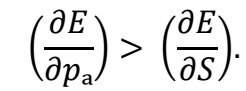
Consequently, the informal costs activated from the very moment of apprehension explain, in large part, why the certainty of punishment surpasses severity in its deterrent capacity. Now, adapting this structure to our criterion for evaluating the foreseeable risk bias and the destruction of the deterrent calculation regarding the liability of political parties, we can interpret that severity not generating an increasing effect does not mean it is irrelevant; it means that reducing it without strengthening the probability of apprehension or sanction dismantles the preventive effect of the system.
And that is precisely what Law No. 32054 ends up producing: by diminishing severity without raising levels of certainty, it erodes the only deterrent mechanism that empirical evidence recognizes as robust.
For a medium-sized party in a campaign, the immediate benefits of the electoral illicit act or prohibited financing are enormous: liquid resources, visibility, buying of support, operational capacity. The probability of sanction is minimal, processes are slow, and personal sanctions on the leadership are, in practice, nonexistent.
The reform introduces two simultaneous changes that sink any deterrent calculation: (i) the collapse of institutional severity; dissolution, suspension, and closure are eliminated. The sanctioning menu is reduced to fines and symbolic restrictions, easily internalizable, fractionalizable, or dilutable. (ii) Zero reinforcements in probability and celerity.
There are no special procedural mechanisms to investigate, map internal responsibilities, or accelerate cases against political organizations.
The result is obvious even to the clumsiest decision-maker: the expected utility of the illicit act increases. Electoral benefits remain intact, and the worst possible scenario is limited to a negotiable fine. Most gravely, the sanctioning architecture does not individualize the decision-maker. In a context where the leadership controls the strategy and the cashbox, the real incentive is: “if something fails, the party pays, not I.”
It is the perverse moral incentive par excellence: it cheapens the crime, transfers the cost to a diffuse entity, and stimulates party capture by internal networks or even criminal organizations. The law, instead of containing political criminality, reduces its price.
5.2. Cognitive biases, defective organizational culture, and absence of tiered liability
The deterrent effectiveness of punishment depends more on the probability and speed of its application than on the severity of the penalty, as we saw in the previous section. In Peru, however, the probability of effective sanction for illicit electoral financing is negligible, in the face of increasingly greater public financing (Molina Pradel, 2022, pp. 69–76), and criminal proceedings last between 4 and 10 years (Arce, 2025), which annuls the system’s deterrent effect. In fact, current legislation has limited the sanctions applicable to parties by excluding drastic measures such as dissolution, weakening a central pillar of the cost-benefit calculation of the crime. Consequently, rational political organizations estimate that, under a weakened punitive threat, committing illicit acts such as receiving prohibited funds results in strategically advantageous outcomes. Empirical experience confirms this impunity: an emblematic case, the Caso Cócteles involving Fuerza Popular, was annulled by the Constitutional Court in 2025 after more than a decade of proceedings without any effective conviction, invoking even the violation of the right to a reasonable time (Tribunal Constitucional, 2025). In sum, the current penal threat is so remote and tardy that it practically does not deter these illicit conducts, generating perverse incentives for parties to incur in illegal financing, recognized by the state itself (CEPLAN, 2020/2025).
From behavioral economics, it is also understood that party leadership suffers from cognitive biases that aggravate the problem. The optimism bias leads leaders—like individual criminals, which is their best simile—to believe that they will not face legal consequences—or that they will be able to elude them, that is, the risk and cost—underestimating the real probability of sanction (Wright, Caspi, Moffitt & Paternoster, 2004, pp. 184–185). In turn, the present bias causes them to prioritize the immediate benefit of illicit contributions over future risks, focusing on short-term electoral gain and relegating the eventual punishment to an uncertain future (Reyes, 2025). This picture is aggravated by a sort of structural irresponsibility: leaders tend to displace the blame onto the party as a legal person, expecting the organization to bear the sanctions (for example, fines paid with party funds), while they evade personal consequences. This fosters a “defective corporate culture,” which is admitted within their organizational freedom since it does not imply that the compliance culture limits absolutely all possible risks (Caro John & Reaño Peschiera, 2022), which cultivates a climate where undue practices are normalized and the lack of individual accountability fuels impunity. Taken together, the biases of optimism and presentism, added to the possibility of shielding irregular conduct behind the party entity, gravely erode crime prevention: leaders excessively trust that there will be no real sanctions, which increases the incidence and recidivism of illicit financing. This environment of low threat and high-risk tolerance can even lead to the constitution of parties with illicit ends, when political actors perceive that the immediate benefits far outweigh the scarce risk of punishment.
Comparatively, other countries have adopted more forceful mechanisms and sanctioning celerity to avoid these incentive problems. In Mexico, the electoral authority imposes fines in the millions expeditiously in the face of financing infractions. For example, in 2021 the National Electoral Institute sanctioned the Green Ecologist Party with 40,933,568 pesos and the loss of propaganda for a year, barely weeks after discovering illicit contributions through influencers during the campaign (TEPJF, 2021). This shows a rapid response that raises the immediate cost of violating norms. Spain, for its part, reformed its Penal Code in 2012 to allow the criminal imputation of political parties, equating them to companies in matters of criminal liability (Santana Vega, 2020). Thanks to this, parties as entities can be investigated and criminally sanctioned for crimes (e.g., corruption, money laundering), facing more burdensome consequences, including high criminal fines or even their judicial dissolution, than mere traditional administrative sanctions. This comparative experience evidences that a stricter and faster punitive regime over political organizations is viable and effective to disincentivize illegal financing: increasing the certainty and promptness of punishment (e.g., immediate fines in Mexico) and contemplating more severe tiered consequences (up to dissolution, as Spain foresees in extreme cases) enormously reinforces the deterrent function of electoral criminal law.
6. Regulatory proposal: towards a tiered model of imputation for political organizations
The structural problem of Law No. 32054 is evident: it recognizes the possibility of criminal liability for political parties but does not define how that liability should be distributed within organizations that do not function as individuals but as complex structures with differentiated levels of power, functions, and risks. The result is an incomplete regime, which accepts the societas delinquere potest but renounces articulating an operational theory of imputation. Without criteria to distinguish managerial failures, operational failures, and individual conduct, any attribution of liability becomes arbitrary: either it is diluted into an irrelevant atomization or it falls disproportionately upon the entire organization, with the additional risk of political instrumentalization.
Overcoming this deficit requires the adoption of a tiered imputation model, coherent with the dogmatics of the criminal law of organizations and with the comparative standards of Italy (D. Lgs. 231/2001), Spain (LO 1/2015), and Chile (Law 20.393). This model allows for reconstructing the penal anatomy of the party by identifying, at each level, the real flows of power, and the specific duties of direction, supervision, and control.
6.1. The leadership: authorship by organizational dominance
The party leadership occupies the strategic apex of the party. From there, incentives are designed, the cashbox is controlled, integrity mechanisms are approved or blocked, and the internal culture is defined. This is the level where risks are deliberately created or tolerated through relevant omissions. Institutional liability must be concentrated here when the infraction derives from: a) strategic decisions that facilitate the crime; b) systematic tolerance of irregular practices; c) internal incentives that promote illicit conduct; d) conscious blocking of prevention or audit mechanisms.
In dogmatic terms, this is the natural ambit of authorship by organizational dominance, the core of contemporary criminal law of organizations. Treating this level the same as the organic base implies denying the real distribution of power within the party.
6.2. Internal organs: liability for operational control deficit
The second level is integrated by treasuries, electoral committees, finance units, logistics, fundraising, and campaign teams. These organs constitute the operational risk centers, where real control deficits manifest: collection of contributions, undeclared spending, document forgery, opaque contracting, financial imbalance, manipulation of information.
Imputation at this level is founded on the organizational defect: the party is liable when the organ breaches duties of supervision, documentation, reporting, and control, and that breach makes a typical result possible. It is not a matter of vicarious liability, but of imputation for structural failures of internal governance. Ignoring this operational layer reproduces the central error of Law No. 32054: the inability to locate the risk where it is actually generated.
6.3. Militancy and organic base: strictly individual liability
The militancy cannot represent, by itself, the “institutional will” of the party. Their acts can only be imputed to the party when: a) they generate institutional benefit; b) they express a defective organizational culture; c) they reflect leadership tolerance.
In the absence of these elements, it is appropriate to exclude party liability. This limit protects democratic pluralism and prevents the penal regime from becoming an instrument of political persecution or a form of disguised objective liability.
6.4. Functional, not extinctive, sanctions
The Constitution does not tolerate sanctions that annul the political-constitutional function of parties. Therefore, a tiered model demands functional and differentiated sanctions, directed at the level where the risk originates: a) strategic sanctions for managerial failures (disqualifications, temporary intervention, mandatory audits, reinforced electoral supervision); b) operational sanctions when the risk stems from functional organs (restrictions on contracting, specific prohibitions, loss of fiscal benefits, reinforced controls in treasury or collection); c) individual sanctions when the fact derives from isolated behaviors of militants.
This approach corrects the indiscriminate elimination of severe sanctions carried out by Law No. 32054. It does not destroy parties; it requires them to act with a minimum standard of internal responsibility.
6.5. Economic-institutional justification of the model
From Law and Economics, a regime with a low probability of prosecution and high duration of proceedings needs to introduce differentiated severity to restore the deterrent equilibrium. Law No. 32054 did the opposite: it reduced severity without raising probability or celerity. The result is a harmless penal system, in which the leadership can externalize costs—“if something goes wrong, the party pays, not I”—and where opportunities for criminal capture increase.
The tiered model operates as a corrective: it identifies real decision-makers, increases document traceability, reduces internal discretion, and raises the organizational cost of non-compliance.
6.6. Behavioral and comparative foundation of the tiered mode
In this context, a tiered model of criminal imputation for Peruvian political parties is justified both empirically and theoretically. Such a model would imply graduating sanctions and responsibilities in accordance with the magnitude of the fault and recidivism, combining immediate and minor measures for slight infractions with drastically greater sanctions for serious or recurrent conduct.
This incentive architecture would correct current distortions: by introducing more palpable consequences in the short term, it would counteract the unfounded optimism of leaderships and their bias for preferring the present, since the cost of receiving illicit money would be tangible and close in time.
Likewise, by foreseeing punitive tiers that can scale up to the suspension or dissolution of the party in extreme cases, leaders would face a much higher personal and political risk for tolerating corrupt practices, thus fostering a culture of compliance. In terms of law and economics, raising the effective probability of sanction and shortening response times increases the negative expected value of offending, deterring illicit behaviors even if fines are initially modest.
International evidence suggests that strengthening these elements is more effective than simply aggravating theoretical penalties: it is the certainty and celerity of punishment that inhibits crime (Nagin, 2013). Therefore, a Peruvian tiered system, with rapid, proportionally increasing sanctions adapted to severity, would increase the traceability of party funds and the prevention of financial crimes, by forcing organizations to be more transparent and diligent to avoid escalating within the sanctioning regime.
In conclusion, by reintroducing adequate incentives and reducing the current sensation of impunity, this gradual punitive model would correct current deterrent failures and align the behavior of parties with the public interest, without sacrificing political pluralism but ensuring that democratic competition is not financed outside the law, in a similar sense to what was concluded in the comparative analysis by the Netherlands Institute of International Relations (International IDEA & Clingendael Institute, 2016, pp. 70–78).
7. Ontology of the system: functional levels and power structure
Before presenting the model that follows, it is necessary to specify why this section adopts a semi-formal architecture. We are not building a closed mathematical system nor a complete normative algorithm: what we propose is an operative conceptual scaffolding proposal, capable of translating the real structure of parties into verifiable imputation criteria. Peruvian and Latin American law currently lacks any internal map of how political organizations function; it attempts to impute them as if they were individuals, and that methodological error explains both the dispersion of liability and the arbitrariness in its application.
The semi-formalization we present is not a technical gesture: it is the only way to prevent imputation from continuing to depend on intuitions, ideological presumptions, or administrative discretion. This scheme allows for reconstructing—in a replicable manner—decision flows, risk generation points, and guarantor positions within the party. Its function is to order, not replace dogmatics, but to justify it in a rule that truly harmonizes, and to offer a common minimum language to evaluate institutional facts without incurring in objective liability.
The complete development of an exhaustive formal model exceeds the limits of this article. Our objective here is more limited but decisive: to present the basic functional ontology that allows, in subsequent research, for the construction of a fully operative normative regime. What follows is, therefore, an indispensable conceptual architecture for understanding how a modern system of organizational imputation should function. Any model delimiting the liability of political parties must start by recognizing that a political organization is not an expanded individual but a hierarchical system with differentiated levels of power, capacity for action, and guarantor positions.
Formally, this structure can be represented as:
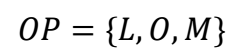
where:
- L: leadership (dirigencia),
- O: internal functional organs,
- M: militancy and organic base.
Each level has a specific vector of institutional risks:
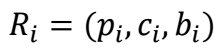
measuring, respectively, the probability of generating an illicit act, the capacity for harm, and the expected institutional benefit. Given that the leadership concentrates organizational dominion, the weights are assigned as:
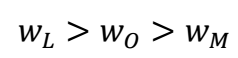
This ontology allows, for the first time, for criminal imputation not to be based on intuitions or political assessments, but on verifiable structures.
7.1. The leadership: the core of authorship by organizational dominance
The liability of the leadership derives from its strategic position: it is the level where incentives are designed, controls are blocked or activated, and risk practices are tolerated or prohibited. According to organizational dogmatics, institutional liability exists when the illicit fact results from:
- a strategic decision by the leadership;
- a structural tolerance regarding illicit practices;
- a conscious blocking or omission of controls; an organizational culture driven from above that enables the illicit act.
This is formalized through the rule:

The leadership, therefore, is not “just another level”: it is the vertex where risk is born, amplified, or contained.
7.2. Internal organs: liability for operational control deficit
Treasuries, electoral committees, finance units, logistics, or documentation represent the operational heart of risk. Imputation to the party proceeds when these organs breach their duties of supervision, traceability, reporting, or auditing, allowing the crime to be executed in their functional zone.
Formally:

Este enfoque evita la responsabilidad vicaria y la sustituye por una imputación por fallas estructurales de gobernanza interna, en línea con los modelos de corporate compliance más avanzados.
7.3. Militancy and organic base: impassable limit to objective liability
The militancy does not express, by itself, the institutional will of the party. Their acts can only be imputed to the organization when they:
- generate direct or indirect institutional benefit,
- reflect leadership tolerance,
- or are linked to operational control failures.
The structural rule is:

If none of this is verified:
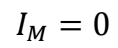
This limit protects democratic pluralism and avoids the political criminalization of the party base.
7.4. The expected cost function: why Law 32054 collapses in deterrent terms
Adapting the economic model of deterrence (Nagin, 2013), the expected cost of infringing the law is determined by:

Law 32054 reduces (severity), but increases neither (probability of apprehension) nor (probability of effective sanction), whereby:
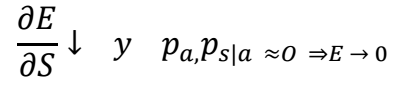
Translated: today, offending in a political organization costs nothing.
This tiered model corrects that failure: it increases traceability, reduces discretion, and raises the institutional cost of non-compliance, without destroying parties or falling into symbolic sanctions.
7.5. Functional imputation matrix and liability operators
To avoid arbitrariness, any imputation must reconstruct the decision chain through a structured matrix ordering:
- sources of risk,
- control failures,
- institutional benefits,
- strategic decisions.
This allows applying the decision rule:

where measures the degree of incidence of the fact at each level.
Likewise, deontic rules such as:

allow expressing the duties of prevention and supervision in logical language.
7.6. Towards an operative law: axioms and functional sanctions
The model is sustained by four axioms:
- Structurality: There is no imputation without identifying the functional level.
- Functionality: Liability is assigned according to.
- Functional proportionality: Each level receives sanctions in accordance with its contribution to the risk.
- No extinction without structural capture: Dissolution proceeds only if high-level criminal capture exists.
Sanctions must follow the same logic:
- Level L (leadership): Strategic and institutional sanctions.
- Level O (organs): Operational and control sanctions.
- Level M (militancy): Individual sanctions.
This regime avoids objective liability and preserves the constitutional function of parties.
8. Conclusions
The Peruvian experience demonstrates that it is not enough to declare the criminal liability of political organizations or to attenuate their sanctions to protect democratic pluralism. The structural problem of Law No. 32054 is not its punitive moderation, but its operational void: it recognizes the criminal capacity of the party but renounces designing an internal imputation model that allows identifying who decides, who executes, who controls, and who benefits. Such a regime is, in dogmatic and economic terms, a system that exists only in appearance.
First conclusion: Criminal law cannot be projected onto political parties without a prior organizational theory. The constitutional function of the party—channeling participation, articulating representation, and sustaining pluralism—prevents the mechanical application of models designed for private companies. But the Peruvian response took the opposite path: it eliminated intense sanctions without replacing them with functional parameters allowing for the individualization of liability within complex organizations. The result is a regime without teeth and without architecture, incapable of fulfilling its preventive end and, in practice, functional to internal opacity.
Second conclusion: The reform destroys the deterrent calculation. From standard theory and behavioral economics, the combination produced by Law 32054 is the worst possible: reduced severity, minimal probability, and nonexistent celerity. Added to this is the absence of tiered liability, which dilutes the cost of the infraction into an abstract entity and stimulates biases already documented in party dynamics: irrational optimism, temporal discounting, risk normalization, and intra-group protectionism. Such a system does not prevent it; it cheapens political crime and displaces its cost toward the organization, never toward those who hold decision-making power.
Third conclusion: The protection of democratic pluralism does not require eliminating sanctions but directing them correctly. Comparative experience is conclusive: Italy, Spain, and Chile preserve the constitutional function of the entity by organizing their sanctions according to the internal anatomy of the risk. They do not pulverize parties; they distinguish levels, weigh functions, locate structural failures, and calibrate the penal reaction according to who generated the risk and what benefit the organization obtained. Law 32054, by refusing to build this architecture, confuses protection of pluralism with directed immunity, weakening both legal interests.
Fourth conclusion: The only viable path for the Peruvian system is to adopt a tiered imputation model. Liability must be concentrated on the leadership when the risk stems from strategic decisions or control omissions; it must be transferred to functional organs when an operational defect exists, and it must exclude the militancy unless there is institutional benefit or directive tolerance. This approach harmonizes pluralism with the requirement of integrity, corrects the perverse incentives of the current regime, and reconstructs the traceability of decisions within the party.
Fifth conclusion: Preventive efficacy will not depend on the catalogue of sanctions, but on the quality of institutional design. As long as party liability continues to be a blurred space, without internal risk maps or differentiated duties, any reform will be symbolic. Organizational Criminal Law demands precision, not declarations; it demands institutional anatomy, not a normative block; it demands drawing chains of command, not assumptions about the “unity” of the party.
In sum, Law No. 32054 fails not because it attenuates sanctions, but because it does not understand the structure it intends to regulate. A criminal law that does not recognize how the party functions is a criminal law that cannot correct it. The pending task is to abandon the declarative logic and build a regime that, inspired by compliance but adapted to the constitutional function of the party, establishes functional levels of liability, verifiable internal control mechanisms, and sanctions directed at those exercising effective power. Only thus can penal prevention coexist with democratic pluralism without becoming a tool of impunity or institutional destruction.
9. References
Academia Judicial de Chile (Ed.). (2021). Responsabilidad penal de las personas jurídicas (Material docente Nº 25). Autor: Osvaldo Artaza Varela. Santiago, Chile. jurídicas. https://academiajudicial.cl/wp-content/uploads/2022/03/RPPJ.pdf
Acevedo, J. (2012). Medios y política: hacia una comunicación plural. Conexión, (1), 33–65. https://revistas.pucp.edu.pe/index.php/conexion/article/view/11556
Alpaca, J. A. (2022). Apuntes sobre la responsabilidad de la persona jurídica por delitos cometidos por personas naturales integradas en su estructura. El caso peruano. Nuevo Foro Penal, 18(99), 53–101. https://publicaciones.eafit.edu.co/index.php/nuevo-foro-penal/article/view/7448
Arce, J. (2025, octubre 20). Fin del caso Cócteles: cronología y todo lo que pasó en la investigación a Keiko Fujimori y Fuerza Popular. Infobae Perú. https://www.infobae.com/peru/2025/10/20/cronologia-del-caso-cocteles-contra-keiko-fujimori-y-fuerza-popular-y-todo-lo-que-paso/
BBC News Mundo. (2018, 17 de octubre). Keiko Fujimori: qué es el “pitufeo”, la modalidad de lavado de activos por la que investigan a la excandidata presidencial en Perú y a su partido. https://www.bbc.com/mundo/noticias-america-latina-45895296
Bayancela Delgado, T. (2014). La responsabilidad penal de las personas jurídicas en el ordenamiento jurídico ecuatoriano, Tesis de grado, Universidad San Francisco de Quito, Colegio de Jurisprudencia. Quito, Ecuador. https://repositorio.usfq.edu.ec/bitstream/23000/3457/1/111624.pdf
Bedecarratz Scholz, F. J. (2020). Defecto de organización y reglas de comportamiento en la imputación de las personas jurídicas. Política Criminal, 15(30), 694–724. https://www.scielo.cl/scielo.php?pid=S0718-33992020000200694&script=sci_arttext
Bernales Ballesteros, E. (2002). Constitución y partidos para la democracia. Just et Veritas, 25, 87–95. https://revistas.pucp.edu.pe/index.php/iusetveritas/article/view/16200
Budzier, A., & Flyvbjerg, B. (2012). Overspend? Late? Failure? What the Data Say About IT Project Risk in the Public Sector. In Commonwealth Governance Handbook 2012/13: Democracy, Development and Public Administration (p.8). London: Commonwealth Secretariat. https://arxiv.org/pdf/1304.4525
Cacchiarelli, A., & Brunelli, G. (2022). La “colpa di organizzazione” dell’ente tra la mancata adozione del Modello organizzativo ex d.lgs. 231/2001. Rivista 231, 3, 1–20. https://www.rivista231.it/Articoli/2022/3/1485/
Camanchaca S.A. (2019). Manual de Prevención de Delitos — Código PR-CM-EPD-006. https://www.camanchaca.cl/wp-content/uploads/2020/11/PR-CM-EPD-006-Manual-Prevencion-de-Delitos.pdf
Caro John, J. A., & Reaño Peschiera, J. L. (2022). Responsabilidad penal de la empresa y criminal compliance. Aspectos sustantivos y procesales. Forseti. Revista De Derecho, 11(15), 9–49. https://doi.org/10.21678/forseti.v11i15.1753
Caro, D. C., & Reyna, L. M. (2016). Derecho penal económico: Parte general. Jurista Editores. https://www.cedpe.com/wp-content/uploads/2018/08/Derecho-penal-economico-parte-general-y-parte-especial.pdf
Castillo, G. (2024). Casi S/.100 millones declararon recibir los partidos en campañas presidenciales de la última década. Ojo Público. https://ojo-publico.com/politica/casi-s100-millones-declararon-recibir-los-partidos-campanas-presidenciales-la-ultima-decada
CEPLAN. (2025). Persistencia de las organizaciones políticas. https://observatorio.ceplan.gob.pe/ficha/t47
De la Jara Basombrío, E. (2023, 10 de enero; actualizado 2023, 31 de enero). El lavado de activos y el financiamiento de campañas. IDL-Reporteros. https://www.idl-reporteros.pe/el-lavado-de-activos-y-el-financiamiento-de-campanas/
De la Mata Barranco, N. J., Dopico Gómez-Aller, J., Lascuraín Sánchez, J. A., & Nieto Martín, A. (2024). Derecho penal económico y de la empresa (2.a ed.). Dykinson. https://dialnet.unirioja.es/descarga/libro/994197.pdf
Durán, L. (declaraciones, 2 de mayo de 2025). En Milla Loo, W. (2025, 2 de mayo). Partidos que utilizaron “fábrica de firmas” no pueden ser “suspendidos” ni “eliminados” por ley del Congreso, dice presidente del Partido Morado. RPP Noticias. https://rpp.pe/peru/actualidad/partidos-que-utilizaron-fabrica-de-firmas-no-pueden-ser-suspendidos-ni-eliminados-por-ley-del-congreso-dice-presidente-del-partido-morado-noticia-1632050
Escrihuela, F. J. (2019). La responsabilidad penal de las personas jurídicas, Tesis doctoral, Universidad Católica de Murcia. https://repositorio.ucam.edu/bitstream/handle/10952/4013/Tesis.pdf?sequence=1&isAllowed=y
FIDH. (2023). Preocupación sobre la erosión institucional en Perú. https://www.fidh.org/es/region/americas/peru/preocupacion-sobre-la-erosion-de-las-instituciones-democraticas-y-el
FIDH. (2024). Perú: una crisis democrática que no termina. https://www.fidh.org/es/region/americas/peru/peru-una-crisis-democratica-que-no-termina
Gil Gil, A. (2015). La expansión de los delitos de terrorismo en España a través de la reinterpretación jurisprudencial del concepto «Organización Terrorista». Anuario de Derecho Penal y Ciencias Penales, LXVII, 113–178. https://revistas.mjusticia.gob.es/index.php/ADPCP/article/view/1191/1191
González, P. (2012). La responsabilidad penal de las personas jurídicas, Tesis doctoral, Universidad de Granada. https://digibug.ugr.es/handle/10481/22250
Gutiérrez Zarza, Á. (2018). Country Report – Spain: Corporate criminal liability. eRIDP – International Association of Penal Law. https://www.penal.org/sites/default/files/Spain.pdf
Hernández Basualto, H. (2010). La introducción de la responsabilidad penal de las personas jurídicas en Chile. Política Criminal, 5(9), 207–236. https://www.scielo.cl/scielo.php?script=sci_arttext&pid=S0718-33992010000100005
Huacasi, W. (2024, 22 de abril). Congresistas en conflicto por ley de impunidad para los partidos políticos. La República. https://larepublica.pe/politica/2024/04/22/congresistas-en-conflicto-por-ley-de-impunidad-para-los-partidos-politicos-congreso-del-peru-parlamento-renovacion-popular-1078726
International IDEA & Clingendael Institute. (2016). Protecting Politics: Deterring the Influence of Organized Crime on Political Parties. https://www.idea.int/sites/default/files/publications/protecting-politics-deterring-the-influence-of-organized-crime-on-political-parties.pdf
Kodea. (2021). Modelo de Prevención de Delitos Fundación Kodea. https://kodea.org/wp-content/uploads/2023/09/12._Modelo_de_Prevencion_de_Delito_MPD_VF_03112021.docx.pdf
León, J. (2020). Partidos políticos y responsabilidad penal: una reflexión en torno al sistema de penas. Teoría & Derecho, Revista De Pensamiento jurídico, 25, 207-237. https://ojs.tirant.com/index.php/teoria-y-derecho/article/view/396
Medina, G. (2023). Responsabilidad penal de las personas jurídicas en Chile. Panorama actual y perspectivas. Estudios Penales y Criminológicos. https://revistas.usc.gal/index.php/epc/article/view/8989/13532
Meléndez, C. (2024). El “dictador” eres tú. El Comercio. https://elcomercio.pe/opinion/columnistas/congreso-el-dictador-eres-tu-por-carlos-melendez-noticia/
Milla Loo, W. (2025, 2 de mayo). Partidos que utilizaron “fábrica de firmas” no pueden ser “suspendidos” ni “eliminados” por ley del Congreso, dice presidente del Partido Morado. RPP Noticias. https://rpp.pe/peru/actualidad/partidos-que-utilizaron-fabrica-de-firmas-no-pueden-ser-suspendidos-ni-eliminados-por-ley-del-congreso-dice-presidente-del-partido-morado-noticia-1632050
Molina Pradel, E. (2022). Financiamiento público directo en el periodo 2017 – 2021: Análisis del nivel de ejecución e idoneidad en el uso de los fondos públicos por los partidos políticos en el Perú, Tesis de Maestría, PUCP. https://tesis.pucp.edu.pe/server/api/core/bitstreams/83712f9b-b151-4f39-823e-b5073617b014/content
Mongillo, V. (2023). La responsabilidad penal de las personas jurídicas en Italia: puntos fuertes, problemas de aplicación y perspectivas de reforma. Estudios Penales y Criminológicos, 43, 327–376. https://revistas.usc.gal/index.php/epc/article/view/9108/13529
Nagin, D. S. (2013). Deterrence: A review of the evidence by a Criminologist for Economists. Annual Review of Economics, 5, 83–105. https://doi.org/10.1146/annurev-economics-072412-131310
Navarro, M. (2011). Tras el líder Oportunidades de un partido personalista para lograr la continuidad luego del alejamiento del lider fundacional: el caso del fujimorismo. Revista de Ciencia Política Politai, 2(3), 139–148. https://revistas.pucp.edu.pe/index.php/politai/article/view/13959
Pariona Arana, R. (2023). El delito de financiamiento prohibido de organizaciones políticas. Boletín IDEHPUCP. https://idehpucp.pucp.edu.pe/boletin-eventos/el-delito-de-financiamiento-prohibido-de-organizaciones-politicas-28070/
Pérez Alonso, E. (2010). Tema 34. En J. Zugaldía Espinar (Dir.), Manual de Derecho Penal. Parte General (pp. 575–594). Tirant lo Blanch. https://es.scribd.com/document/595442044/Zugaldia-Fundamentos-Derecho-Penal
Ramos Martínez, P. L. (2024). Gobierno promulga ley aprobada por el Congreso que excluye a partidos políticos de responsabilidad penal. RPP Noticias. https://rpp.pe/politica/gobierno/gobierno-promulga-ley-aprobada-por-el-congreso-que-excluye-a-partidos-politicos-de-responsabilidad-penal-noticia-1560739#:~:text=La%20norma%20promulgada%20fue%20publicada,%2D%20Disoluci%C3%B3n.
Ramos, V. (2024, 13 de mayo). Ley que excluye de responsabilidad penal a partidos es “una injerencia en los procesos en trámite”. LP Derecho. https://lpderecho.pe/carlos-caro-excluir-responsabilidad-penal-partidos-congreso/
Reyes, V. (2025). Política pública de impunidad: el desarrollo sistemático de una agenda estatal antijusticia. IDEHPUCP. https://idehpucp.pucp.edu.pe/boletin-eventos/politica-publica-de-impunidad-el-desarrollo-sistematico-de-una-agenda-estatal-antijusticia/
Sandoval, J. C. (2022). El delito de financiamiento prohibido de organizaciones políticas. Derecho PUCP, 88, 181–233. https://www.redalyc.org/articulo.oa?id=533671980007
Santana Vega, D. M. (2020). Consideraciones críticas sobre la responsabilidad penal de los partidos políticos como instrumento de lucha contra la corrupción. Política Criminal, 15(29). https://doi.org/10.4067/S0718-33992020000100076
Silva Sánchez, J. M. (2006). La aplicación judicial de las consecuencias accesorias para las empresas. InDret, (2), 1–22. https://indret.com/wp-content/themes/indret/pdf/342_es2.pdf
Vázquez Soriano, M. A. (2024). La debilidad de las instituciones como instrumento político. Revista Mexicana de Ciencias Políticas y Sociales, 69(251). https://www.scielo.org.mx/scielo.php?script=sci_arttext&pid=S0185-19182024000200433
Wright, B. R. E., Caspi, A., Moffitt, T. E., & Paternoster, R. (2004). Does perceived risk deter criminally prone individuals? Journal of Research in Crime and Delinquency, 41(2), 180–213. https://doi.org/10.1177/0022427803260263
Norms, jurisprudence and instruments cited
Chile, Congreso Nacional. (2009). Ley 20.393, responsabilidad penal de las personas jurídicas. https://www.bcn.cl/leychile/navegar?idNorma=1008668
Constitución Política del Perú (1993). Artículo 35. https://www.oas.org/juridico/spanish/per_res17.pdf
España, Cortes Generales. (2015). Ley Orgánica 1/2015, de modificación del Código Penal. https://www.boe.es/eli/es/lo/2015/03/30/1/con
InformaImpresa (2020). Decreto legislativo 231/2001 – La giurisprudenza della Corte di Cassazione sulla colpa di organizzazione. Sistema Camerale. https://www.informaimpresa.it/item/decreto-legislativo-231-2001-le-sentenze-della-corte-di-cassazione-sulla-colpa-di-organizzazione
Italia, Governo della Repubblica. (2001). Decreto Legislativo 231/2001. https://www.grfarma.it/wp-content/uploads/2022/01/Decreto-Legislativo-231-2001.pdf
Ministero della Giustizia. (2009). Relazione ministeriale al Decreto Legislativo 231/2001. https://www.grfarma.it/wp-content/uploads/2022/01/Decreto-Legislativo-231-2001.pdf
Tribunal Supremo (España). (2003). Sentencia del caso Batasuna/HB/EH. https://www.naiz.eus/media/asset_publics/resources/000/191/001/original/20150618_sentencia_ts_herrikos.pdf
Tribunal Constitucional del Perú (2025). Sentencia 185/2025, Exp. 02109-2024-PHC/TC. https://www.tc.gob.pe/jurisprudencia/2025/02109-2024-HC.pdf
TEPJF (2021). Boletín 153/2021. https://www.te.gob.mx/front3/bulletins/detail/4205/0
Ley Orgánica 6/2002, de Partidos Políticos (España). https://www.boe.es/buscar/pdf/2002/BOE-A-2002-12756-consolidado.pdf
Fiscalía General del Estado (España). (2016). Circular 1/2016. https://www.civil-mercantil.com/sites/civil-mercantil.com/files/NCR007605_0.pdf
Funding: The present article has not received funding associated with the public, commercial, or for-profit sectors. Its development was entirely assumed by the author.
Conflict of Interest: The author declares no conflicts of interest in relation to the present article or with other authors, institutions, or entities that could influence its content.
Author Contributions (CRediT Taxonomy): The author declares their contributions to the present research article, using the CRediT taxonomy: Conceptualization: (100%); Formal Analysis: (100%); Investigation: (100%); Writing - original draft: (100%); Writing - review and editing: (100%).
Declaration on the Use of AI: The author declares that artificial intelligence tools were used in specific phases of the manuscript preparation process.
In particular, language models (GPT-5.2, OpenAI) were employed for instrumental support in the search and filtering of bibliographic sources and in the grammatical review of sections of the text.
For the formal analysis of the proposed model and the adaptation of mathematical expressions and operations, Software tools such as Python/SymPy were used. The conceptual design and the writing of the original draft were carried out entirely by the author.
Explorar
Artículos
Volúmenes
Sobre la revista
Más leídos
El control externo en la administración del estado. Una visión actualizada
Tarapacá Law Journal (TLJ)
Los hilos invisibles: cien años de las mujeres en el Poder Judicial chileno y los desafíos para el presente y el futuro
Tarapacá Law Journal (TLJ)
The invisible threads: one hundred years of women in the Chilean Judiciary and the challenges for the present and the future
Tarapacá Law Journal (TLJ)
Enfrentando la vulnerabilidad: la reparación integral como respuesta por parte de la Corte Interamericana de Derechos Humanos
Tarapacá Law Journal (TLJ)
Facing vulnerability: integral reparation as the Inter-American Court of Human Rights’ response
Tarapacá Law Journal (TLJ)